
Your home before the rain: what to check and how to prepare
Clear drains, sound seals and safe heating are a good start to the wet season. Here is how to check your home and document faults that need the landlord or the building committee.
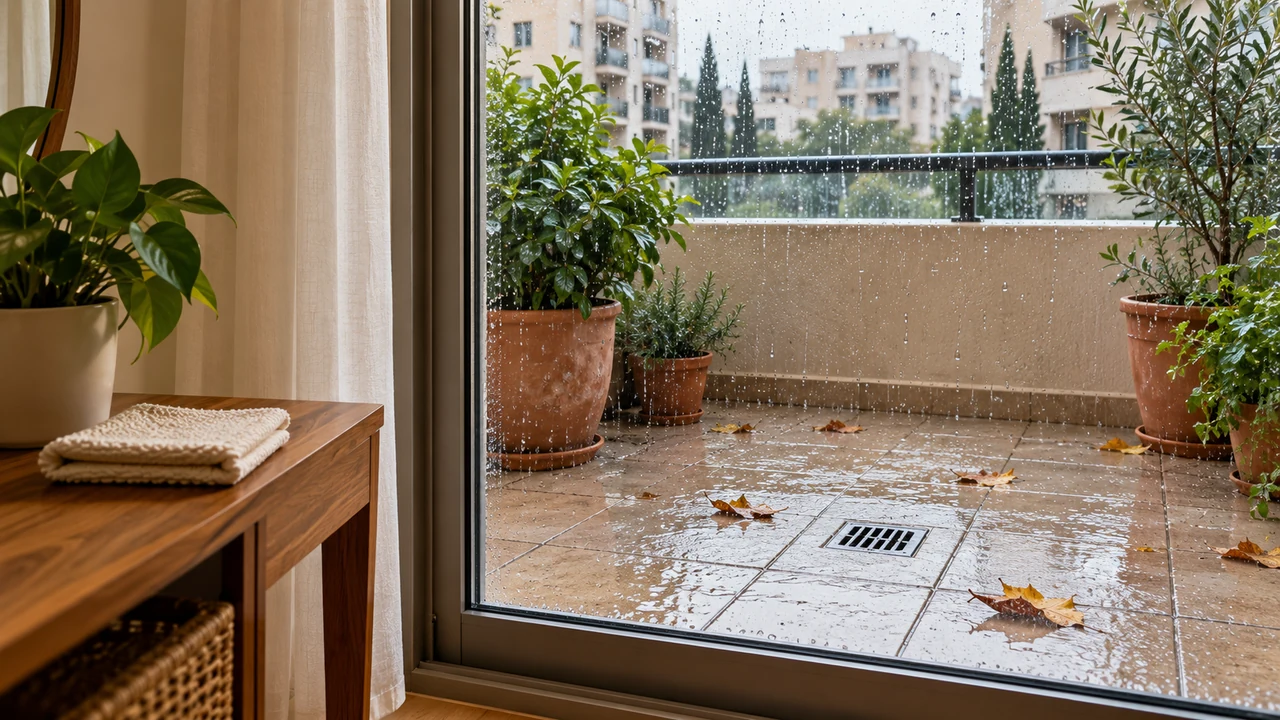
Give the water a way out
Preparing for the first rain is best started on the balcony and at the drains, in dry weather and daylight. Clear leaves, soil and debris from drains you can reach safely, and move plant pots and objects that cover them. On the balcony, check that no rug or furniture stops water from reaching the drain. If water still stands after the debris is removed, a professional needs to check it, rather than pushing things into the pipe.
Gutters, roofs and high connections require safe access and the right knowledge. Do not climb onto a wet roof, do not lean over the railing and do not improvise a ladder. In a shared building, contact the building committee in advance to arrange a check of the roof drainage and sealing, especially if there were leaks last winter.
Check windows, doors and signs of leaks
Close windows and balcony doors and check whether they lock properly, and whether the rubber seals are torn, hard or missing. Clean dirt from the tracks without blocking their drainage holes. Peeling around the frame, a stain on the ceiling or damp under a window are reasons for a check, even if the wall feels dry on the day you look.
Do not immediately cover every gap with sealant: sometimes it is an opening meant for drainage or ventilation. The right sealant and the source of the leak need to be assessed according to the type of window and the structure. On the balcony, move objects that could fall in the wind, and do not try to fix an outside connection that cannot be reached safely from inside the home.
Reduce humidity and deal with the source of damp
Even without a leak, steam from showers, cooking and drying laundry can build up in a closed home. Air the rooms when the weather allows and use ventilation that extracts air outside, if you have it. Wipe condensation from windows and dry wet surfaces promptly, as long as there is no electrical hazard nearby. Ventilation helps reduce humidity, but it does not fix water coming in through the roof or the wall.
Mold that returns after cleaning means the source of the moisture needs investigating; painting over it is not a solution. When there is widespread mold or persistent damp, call a professional. Do not mix cleaning products. If coughing, wheezing or worsening symptoms appear at home, consult a doctor; with significant difficulty breathing, call 101 for Magen David Adom.
Use heating without improvising
Before switching on a heater or electric blanket, check while it is unplugged that there is no visible damage to the cable, the plug or the fabric. A damaged appliance stays unplugged until it has been professionally checked. The fire safety guidelines for the winter emphasize keeping heaters away from flammable materials and switching heating appliances off before sleep. Place a heater on a stable surface, away from curtains, bedding and water, and do not dry clothes on it. Follow the manufacturer's instructions and plug it into a sound socket, without a multi-plug adapter or extension cord.
Use an electric blanket only according to its instructions, spread flat and dry, without folding it during use. To warm the bed in advance, unplug it before getting in. Whether it is suitable for children or for people who have difficulty sensing heat requires professional advice. In case of fire or smoke, move away from the danger and call 102.
Document and report to the landlord and committee
If you rent, photograph the fault close up and also the whole wall or room, so the location is clear. Note the date, when the damp appeared, whether it had rained and whether the stain has grown. Send the landlord a written description and photos, and for a problem involving the roof, a gutter or a shared area, inform the building committee too. Ask to arrange an inspection and keep the correspondence.
Danger comes before documentation: when water reaches a socket, an appliance or an electrical panel, do not touch them and do not step into the water. Keep people away and contact a licensed electrician; in immediate danger, call emergency services. Clarify who is responsible for the repair according to the circumstances of the fault and the rental agreement, without assuming in advance that every damage is the tenant's responsibility.