A small pantry that works: organise around what you cook
Before buying more containers, check what disappears at the back, what keeps returning to the shopping list and where each item belongs.
Start with one shelf, not the whole kitchen
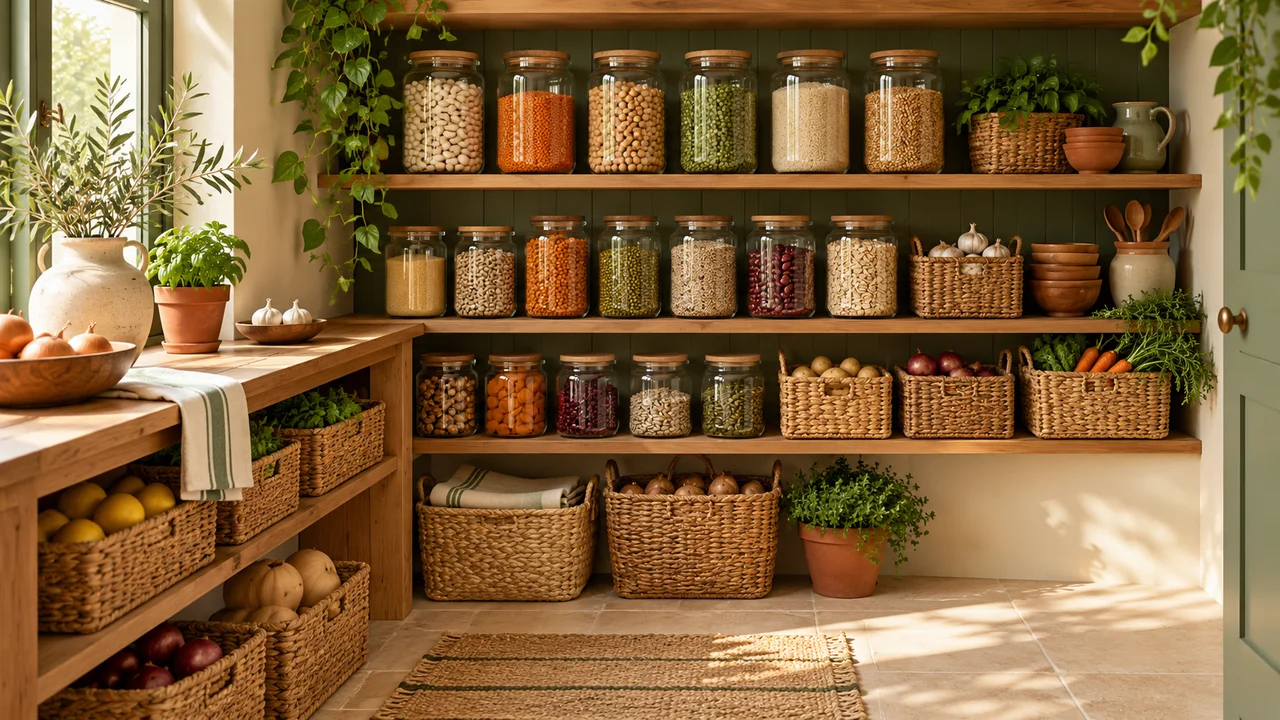
A convenient pantry lets you find what you need and put it back without moving three packets. You do not have to empty every cupboard to achieve that. Choose a shelf that bothers you daily, remove its contents and put them together. You can then see how many open rice bags are hiding there and which products occupy space despite rarely being used. Finish one area completely before moving to the next.
Sort according to your meals
An attractive arrangement by packaging colour does not always help when making dinner. Group products you take out together instead: baking ingredients, breakfast foods or things you add to pasta. There is no need for a perfect system that suits everyone. If you make sandwiches every morning, keep the relevant ingredients in the same area. Things used only for occasional entertaining can go somewhere less accessible. Your household's habits determine the arrangement, rather than a photograph of someone else's kitchen.
Keep the back within sight
The back of a shelf easily becomes forgotten storage. Instead of filling it with another row, consider whether a pull-out basket would reveal the contents in one movement. Put tall items at the back and shorter ones in front where the shelf allows. If you must remove half the cupboard to reach a product, its position probably does not suit how often you use it. You can also leave a small gap between groups. Empty space is not wasted when it lets you see what is already there.
Do not decant just for appearances
Before buying containers, measure the shelf depth and available height. Also check whether the lid opens easily when the container is in its intended place. There is little point replacing packaging that is easy to close and read with a container that hides the product's name. If you decant food, keep storage instructions, date labels and information important to the household, including allergen warnings. Do not combine products without knowing what entered the container and when. The aim is to make use easier, not create a new puzzle.
Shopping starts at the shelf
Before adding a product to the list, look at its group in the pantry. It may already be at the back, or there may be an open packet worth using according to its instructions. Designate a place for extra stock instead of scattering duplicates around the kitchen. When that space is full, there is good reason to check whether you really need more. A short list of missing products is more convenient than a pile bought because it felt as though there was nothing at home.
Test the arrangement in everyday use
After a few days, notice where things pile up again. Perhaps the basket is too deep, one group is larger than expected or household members do not know where to return a product. A short label or a change to one shelf may be enough. Keep frequently used items within reach and adapt the arrangement when cooking habits change. A successful system is one that returns to a pleasant state with a few simple actions after a meal, rather than staying picture-perfect. Revisit it occasionally, especially when habits change or new items come into the home.