Netherland dwarf rabbits: small size, full rabbit needs
Before bringing home a dwarf rabbit, plan for safe space, suitable companionship, food and veterinary care over many years.
Size does not tell the whole story
A Netherland dwarf rabbit can fit into a suitable home, but it is not a pet whose needs can be met with a small cage and a food bowl. Its compact body and round face do not reduce its need for movement, hiding places and a relationship with a compatible rabbit. Before adopting, the important question is whether the family can provide safe space and regular care, even after the initial excitement fades, rather than whether there is room for a cage.
Get acquainted at floor level
Many rabbits dislike being picked up. Even a calm rabbit can become frightened and try to escape, and a fall can cause serious injury. Get to know it while sitting on the floor, let it approach and stop touching it when it moves away. Breed does not guarantee a particular temperament, so getting to know the individual animal matters. In a home with children, an adult must be responsible for care and supervise interactions; the rabbit is not a toy to be held in turns.
Prepare living space, not just a sleeping corner
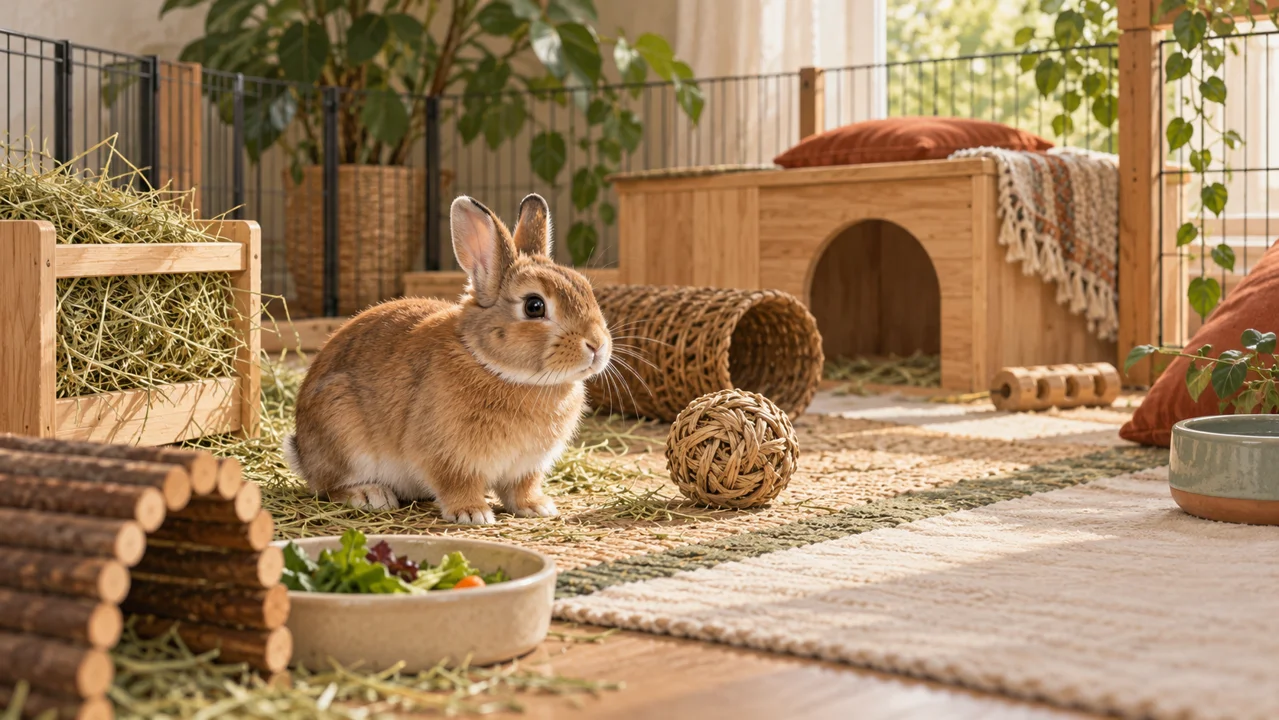
Plan an enclosure that allows movement and exploration, alongside a sheltered resting place. Stable, non-slip flooring, hiding places and suitable things to chew and explore meet different needs. Keep electrical cables and cleaning products away, and check houseplants and any parts that might fall from them. Do not position the enclosure in direct sunlight or beside a heat source. Think in advance about cleaning the area and who supervises when the rabbit is let out.
Companionship needs a suitable match
Rabbits are social animals, but putting two unfamiliar rabbits in the same enclosure is not a safe way to create a pair. Seek guidance from an experienced rescue organisation or veterinarian on compatibility, neutering and a controlled introduction. Consider adopting an already bonded pair. Even in a successful bond, each rabbit needs to be able to retreat and rest separately. Human attention matters, but does not necessarily replace a compatible rabbit companion.
Diet and monitoring start on day one
The basis of the diet is readily available, good-quality grass hay, alongside clean water and additions suited to age and health. Do not build the diet around carrots or treats. Ask about the food the rabbit currently eats and avoid sudden changes. Check daily that it is eating, active and producing droppings as usual. Reduced eating, drooling or withdrawal are not personality traits of a small rabbit: they are reasons to contact a veterinarian, and stopping eating requires immediate contact.
Plan for the less photogenic routine too
Find a clinic that treats rabbits in advance and ask how to get urgent help outside opening hours. The adoption budget should include hay, cleaning, equipment, examinations and treatment for illness, rather than just the animal's price. Decide who will care for it during holidays and how to transport it safely. Before committing, describe an ordinary day at home: who checks eating in the morning, who cleans and who notices a change? Those answers matter more than coat colour.