
A Week of Winter Soups Without Cooking Every Evening
Plan a few winter soups, use vegetables in time and store portions safely for easier weekday meals.
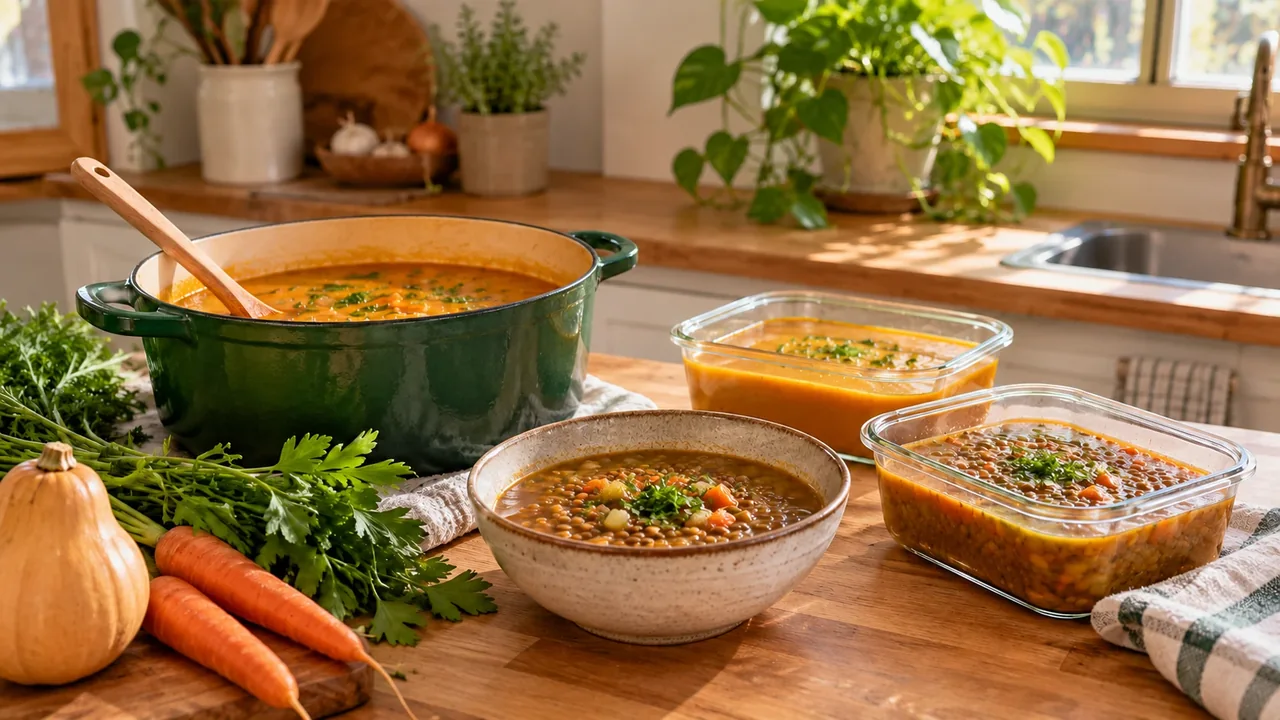
A week of winter soups starts with a small decision: how many meals do you actually want soup for? Count the evenings at home and the lunches that need packing. Two familiar recipes can cover several meals without turning the kitchen into a weekend project.
The useful distinction is between cooking for the week and keeping everything in the fridge for the week. Plan some portions for the next few days and freeze the rest promptly. That leaves room for changing plans without expecting one pot to stay fresh indefinitely.
Choose a few bases that work together
Pick two soups with overlapping ingredients but different textures. A smooth carrot and squash soup can sit alongside a chunky vegetable and lentil soup. Onions, carrots and celery can serve both, while the finished bowls still feel different. Choose recipes you already understand before attempting a larger batch.
Check the vegetable drawer before writing a shopping list. Use sound vegetables that are losing crispness, but discard anything mouldy, slimy or clearly spoiled. Cooking does not make spoiled ingredients suitable again. Wash produce under running water, and buy only what the selected recipes still need.
Decide whether each soup is the meal or part of it. Lentils or already cooked beans can make a vegetable soup more substantial; bread or another familiar side can complete dinner. Keep dietary needs and allergies in mind when planning toppings. There is no need for every bowl to contain everything.
Make one cooking session manageable
Clear a work surface and prepare storage containers before turning on the hob. Wash and chop shared vegetables together, then divide them between the recipes. Keep quantities within the capacity of your pots and fridge. A smaller batch that cools and stores properly is more useful than an overflowing stockpot.
Follow each recipe's cooking order instead of adding every ingredient together. Root vegetables, lentils and delicate greens need different handling. Use cooked beans if you want to avoid a separate soaking and cooking task. Add water gradually, remembering that you can thin a thick soup when reheating it.
Leave finishing touches until serving. Lemon, chopped herbs or a little olive oil can change the character of a familiar base without another cooking session. Cook pasta separately when practical and add it to the bowl, so it does not keep absorbing the stored broth. Keep toppings in their own containers.
Cool, refrigerate and freeze with a plan
Divide soup into small, shallow containers for rapid cooling. Do not leave a large pot on the counter until completely cold. Refrigerate promptly, within two hours of cooking, or within one hour in temperatures above 32°C. Keep the fridge at 4°C or below, leaving space for cold air to circulate.
Use refrigerated soup within three to four days. Freeze portions intended for later in the week promptly rather than waiting until that window ends. Choose freezer-safe containers, allow room for expansion, and mark the contents and cooking date. Portion sizes should match an ordinary meal, including a smaller serving for a single lunch.
Thaw a frozen portion in the fridge, not on the counter. Reheat thoroughly, stirring to distribute heat, and bring soup to a boil; a food thermometer should read at least 74°C throughout. Heat only what you plan to eat. Discard food with uncertain storage history rather than relying on its smell.
Keep weekday meals flexible
Give the freshest refrigerated portions the first places in your schedule. Move a frozen container to the fridge ahead of the day you need it, allowing time to thaw. If plans change, use another meal and leave still-frozen portions for later. The freezer is part of the plan, not evidence that planning failed.
Make serving easy by keeping bowls, suitable containers and simple accompaniments accessible. For a work lunch, check that refrigeration and reheating are available before choosing soup. Transport it chilled in an insulated bag with ice packs and refrigerate it on arrival. Do not leave it on a desk all morning.
At the end of the week, notice what was actually eaten. Perhaps one recipe made too much, or everyone preferred smaller portions with bread. Adjust the next batch accordingly. A reliable soup routine grows from those ordinary observations, leaving you with food you want to eat and less preparation on busy evenings.