Rabbit food: hay at the centre, pellets as a supplement
What should be available all day, how to choose supplementary food and why appetite changes matter more than brand preferences.
Start with the diet, not the food bag
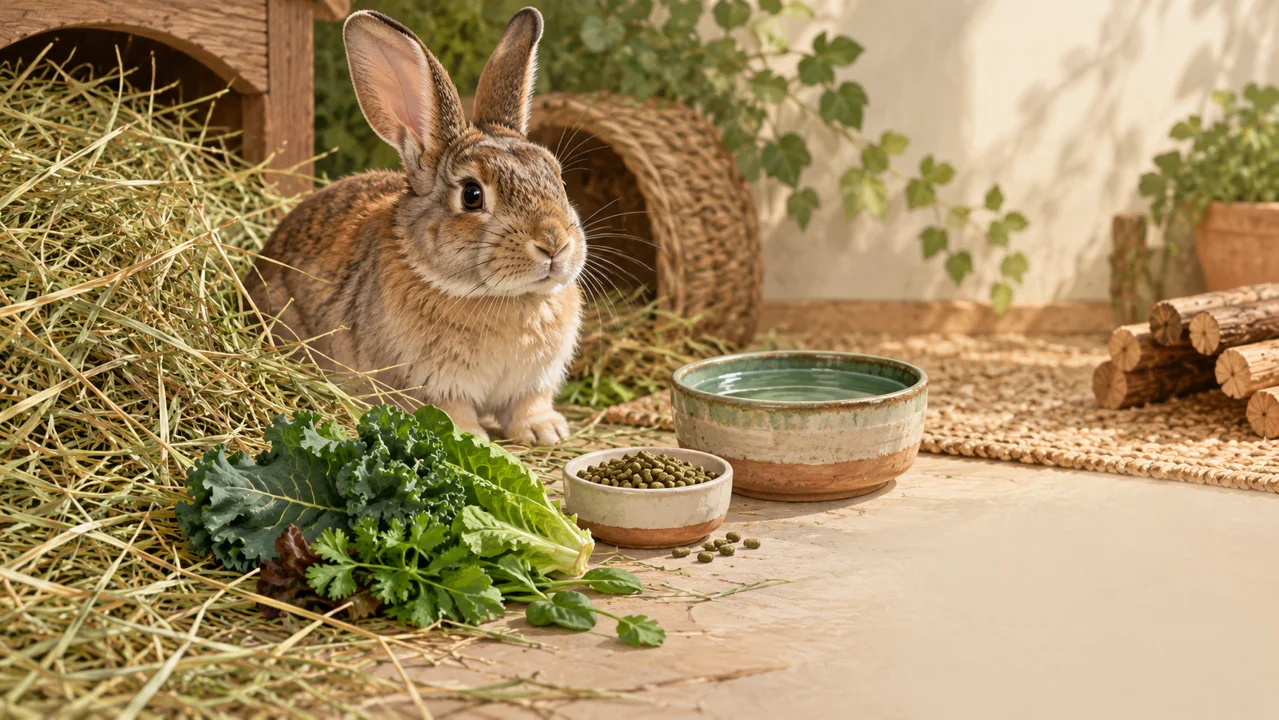
A rabbit's main food is not a bowl full of pellets. Most of the diet should be good-quality grass hay, with constant access to clean water. Prolonged chewing of fibrous food supports digestive function and wears down teeth, which grow throughout life. Pellets, greens and treats do not all serve the same role. Before comparing packaging, check what the rabbit actually eats during the day and how much hay goes unused.
Available hay the rabbit actually wants to eat
Look for hay intended for eating, without mould or a musty smell, and offer it in a clean, accessible place. Timothy, meadow or another suitable grass hay can form the basis of an adult rabbit's diet. Alfalfa is not the same as grass hay, and its suitability depends partly on age and life stage. Young rabbits, pregnant does and rabbits with medical problems may need a different plan. Do not automatically apply a quantity intended for a healthy adult to every rabbit.
Uniform pellets instead of a mix to pick through
Supplementary food should be made for rabbits and suit their life stage. Uniform pellets make selective eating harder, a problem that can arise with colourful mixes containing seeds or dried fruit. Check the ingredients and storage instructions, and keep the food sealed in a dry place. Daily quantities need to suit weight and body condition. Refilling the bowl whenever it empties can displace hay consumption, so measure the portion agreed with the veterinarian.
Greens, water and treats
Leaves and herbs suitable for rabbits can be part of daily feeding. Wash them and introduce new foods gradually in small amounts while monitoring eating and droppings. Do not assume every garden or kitchen plant is safe. Fruit and root vegetables such as carrots are suitable at most as limited treats, rather than the meal's foundation. Check daily that the water container is clean, water is available and any drinking bottle is not blocked.
Change habits without withholding food
If a rabbit is used to unsuitable food, do not remove it abruptly in the hope that hunger will make it eat hay. Request a gradual transition plan and check that it keeps eating throughout. Refusing hay may also warrant a dental check or medical investigation, rather than just a brand change. Keep a short record of food, quantities and observed changes; it will help the veterinarian understand the situation without relying on memory during the visit.
An appetite change is a reason to act
A rabbit that eats less, stops eating or produces fewer droppings needs prompt contact with a veterinarian who treats rabbits. Do not wait until the next day to see whether it gets used to new food. Eating a single treat does not prove everything is fine if the eating pattern has changed. Do not start medication or syringe feeding without appropriate guidance. Diet aims to support health, but loss of appetite requires investigation of the cause, rather than just a list of recommended foods.