Pack for a short weekend without taking half the house
Start with the itinerary, choose clothes that work together and leave room for the things you actually use.
Packing starts with the schedule
Before getting out a suitcase, write down what you expect to do over the weekend: travel, eat out, go for a walk or spend time with friends. Beside each activity, note what it actually requires. This shows whether you need two kinds of shoes or one pair, and whether there is any reason to pack a dressy outfit. A short activity list is more useful than a long belongings list because it gives every item a clear role.
Choose combinations before quantities
Lay the clothes you plan to take on the bed and assemble complete outfits. A shirt that seems useful alone may need trousers and shoes you did not intend to pack. Favour items you have worn together and find comfortable throughout an ordinary day. Check the weather forecast shortly before leaving too, but do not pack a separate bag for every possible scenario. One extra layer that works with several combinations can replace several less versatile pieces.
Distinguish a sensible spare from excess
For a short trip, ask what happens if one item gets dirty or proves unsuitable. Sometimes another shirt solves the problem; sometimes you can reuse something already packed. There is no need to double every outfit merely to feel prepared. If an activity needs a complete change, pack for it specifically. This leaves room for a real need instead of filling the bag with things taken out of habit.
A toiletry bag for your actual routine
Mentally go through your morning and evening routines and list only what you will use during the trip. If your accommodation supplies something you intend to rely on, check beforehand. Pack liquids in tightly closed containers, separately from clothes and papers. If the trip involves a flight, check the relevant authorities' instructions for your route rather than assuming every bag or container is accepted everywhere in the same way.
Keep what you need on the journey accessible
Documents, a wallet, keys, glasses and a charger should not be buried beneath clothes. Group things you will use on the journey in a pocket or pouch you can reach without opening the whole bag. Choose a fixed place for small items you take out and put back frequently too. Before leaving, make sure you know where each is. Accessible organisation saves searching just when you are queuing or getting out of a vehicle.
Leave room for the return journey too
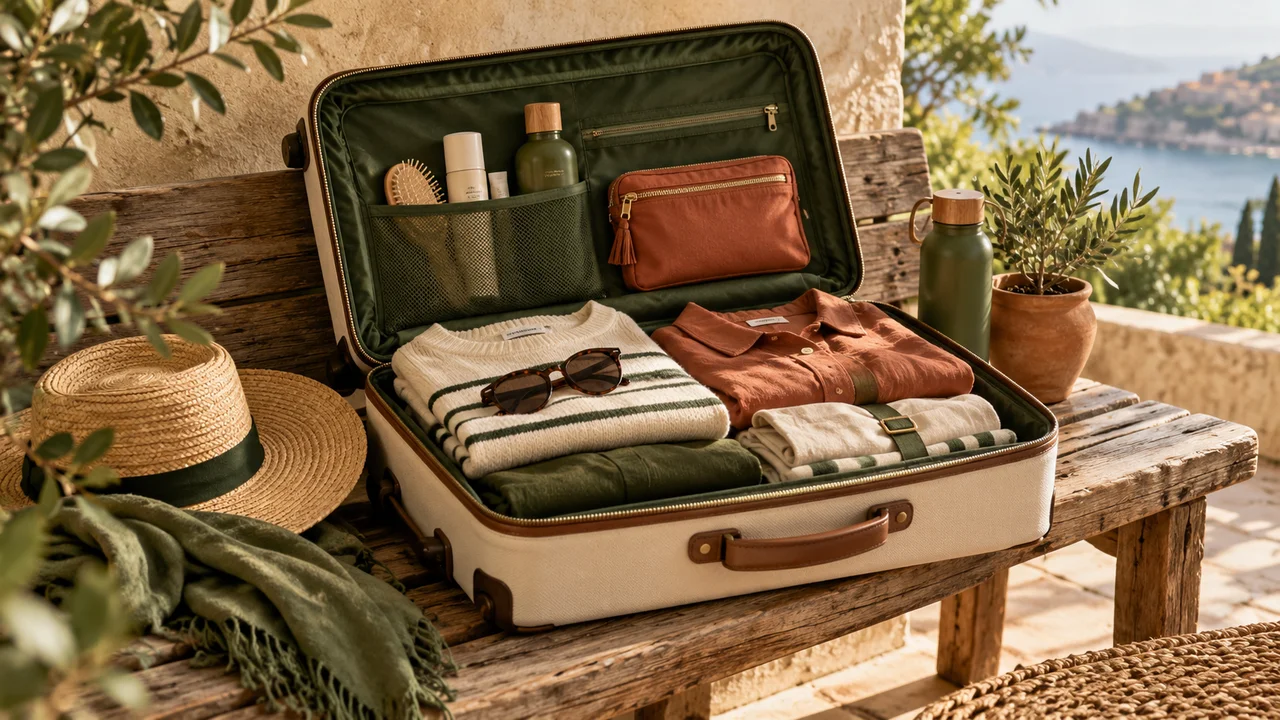
A bag packed to the limit requires precise repacking every time it opens. Leave a little free space and add a bag or pouch for worn clothes. If you plan to bring something for your hosts or buy something along the way, account for its volume too. No single folding method suits every garment and bag. Choose the arrangement that makes items easy to see and retrieve, rather than just one that looks tidy in a photograph.
Improve the list when you get back
While unpacking, notice what never left the bag and what was missing. Add two short notes to your packing list instead of trying to remember them until the next trip. An unused item is not necessarily always unnecessary, but it is worth understanding why you took it. After a few trips, you will have a list suited to your habits. Next time, start with that and adapt it to the itinerary, rather than rebuilding a suitcase around every small concern.