A city on wheels: planning practical rides in Tel Aviv
A cycle route map is a good start, but junctions, parking and the journey home determine whether a ride really works for you.
From a cycling event to a repeat journey
A cycling event can give you a reason to go for a ride, but a habit grows from simple journeys: to the office, a friend's home or a quick errand. To get started in Tel Aviv, choose a nearby destination you do not need to reach in a hurry. Check the route in advance and try it in daylight. A first ride that leaves you feeling familiar with the route is more useful than a long one chosen simply because it looks impressive on the map.
Follow the map all the way
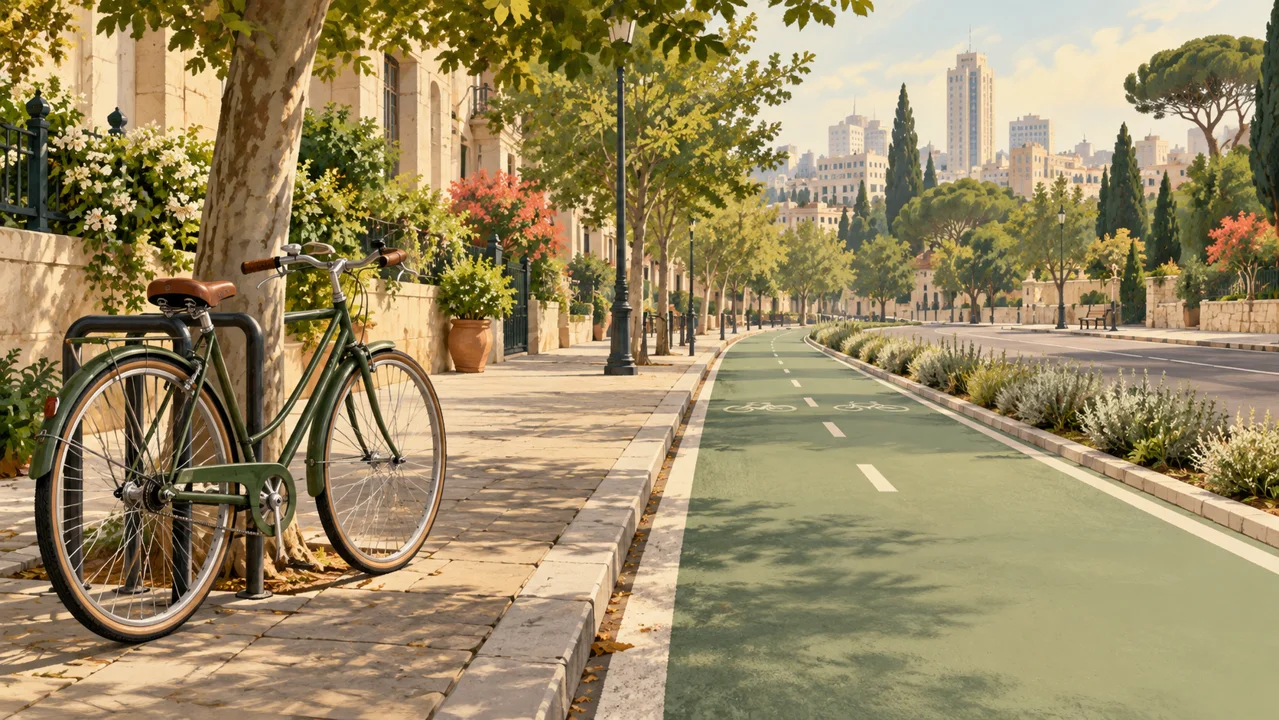
The municipality's website has information on cycle paths and a map of the city's infrastructure. Note the difference between an existing path, a section under construction and a future plan. Do not just check for a line near your home and your destination: follow the connections, junctions and final stretch to the entrance. A route that looks convenient as a straight line may include a crossing you do not want to cycle through. Check whether the return journey differs from the outward route too.
Continuity matters more than the shortest distance
Compare two options by ease of navigation and number of crossings, rather than just the journey time shown in an app. The municipality describes creating a continuous, connected network as part of its cycling policy, but this does not mean every route in the city is already continuous. If a particular section feels uncomfortable, you can plan to walk your bicycle or choose another route. An app marking does not replace a road sign, a temporary closure or your judgement on the street.
Approach junctions with a plan
Read the markings before entering a junction and do not change direction suddenly just to catch a light. The municipality's guidance distinguishes between designated cycle crossings and pedestrian crossings, where you walk your bicycle. Cycling on a pavement that is not a cycle path is prohibited. If you need to check the route on your phone again, stop somewhere safe without blocking the path. Losing a moment is better than trying to understand directions while moving.
Check the destination too
Find out where you can park and lock your bicycle without blocking an entrance, ramp or passage. Is there a suitable place near your destination, and will you need to walk a little from there? Allow for this in your schedule. If the journey includes public transport, check the operator's rules on carrying bicycles beforehand instead of assuming the rules are the same for every mode and time of day. Have an alternative for weather that does not suit you too.
Looking for an event? Check the year
A headline about a cycling month or city ride does not prove that the event is happening again this year. Before registering or arriving, check a current announcement from the municipality or organiser, including the date, starting point, suitability for your cycling level and route changes. This guide is about planning rides, not an events calendar. After your first journey, note one thing to improve: more convenient parking, an earlier start or an easier turn to recognise. That is how a map becomes a route you really know.